
An AI Powered Approach to Digital Transformation
Artificial intelligence is changing how people work and how software is created. One of its most significant opportunities is helping businesses build the applications that run their operations.
Imagine describing a business requirement in plain English and having AI translate it into a working application with processes, tasks, roles, screens, forms, and business rules. Instead of starting every project from a blank development environment, teams can start with an application that works the minute you provide the AI prompt! It is ready to be used right away or configured. There is no more coding, just customizations that can be done easily! If you are not excited yet, let me say this out loud - "AN AI PROMPT JUST GAVE YOU A WORKING APPLICATION READY TO BE USED - NOT AN MVP OR A PROTOTYPE. IT IS A WORKING APPLICATION HOSTED IN A HIGHLY SCALABLE ARCHITECTURE WITH BEST SECURITY AND ALL ENTERPRISE GUARD RAILS AND GOVERNANCE IN PLACE!!! YOU JUST CREATED IT IN 1 TO 2 MINUTES USING A SIMPLE AI PROMPT."
This is a dream that we just realized at DigitifyNow: an AI-native enterprise application platform designed to make business software creation lightning fast, more direct and adaptable.
From a business requirement to an application
Consider a company that wants to digitize its procurement process. Employees submit purchase requests, managers review them, Finance checks budgets, and Procurement coordinates vendors and purchasing.
A description of that process can provide the starting point for an application. AI can help translate the requirements into building blocks such as:
- Process definitions and workflow steps
- Task instructions and role assignments
- Forms, screens, and custom data fields
- Review and approval stages
- Task routing and process transitions
- Business rules, validations, and calculations
- API configuration for connecting external systems
The platform provides the application structure and execution environment; people review the result and ensure it reflects the organization's real requirements. If it does not align, it is easy to change the configurations and verify. The process takes a few minutes - there is no technical team involved that needs to take your feedback, change the screens by coding and then deploy the changes so you can verify it. This can take days or weeks. You are not doing any of this - you change in a few minutes and see the change in REAL-TIME by using the software right away!
Beyond application creation: coordinating business operations
Generating an application is only one part of the opportunity. Business software must also help people get work done across teams and systems.
DigitifyNow brings together configurable processes, task-oriented screens, data, and integrations so organizations can structure how work moves from one step to the next.
Depending on the application and its configuration, this can include:
- Assigning work to the appropriate users or teams
- Coordinating reviews, approvals, and status transitions
- Capturing information through task-specific forms
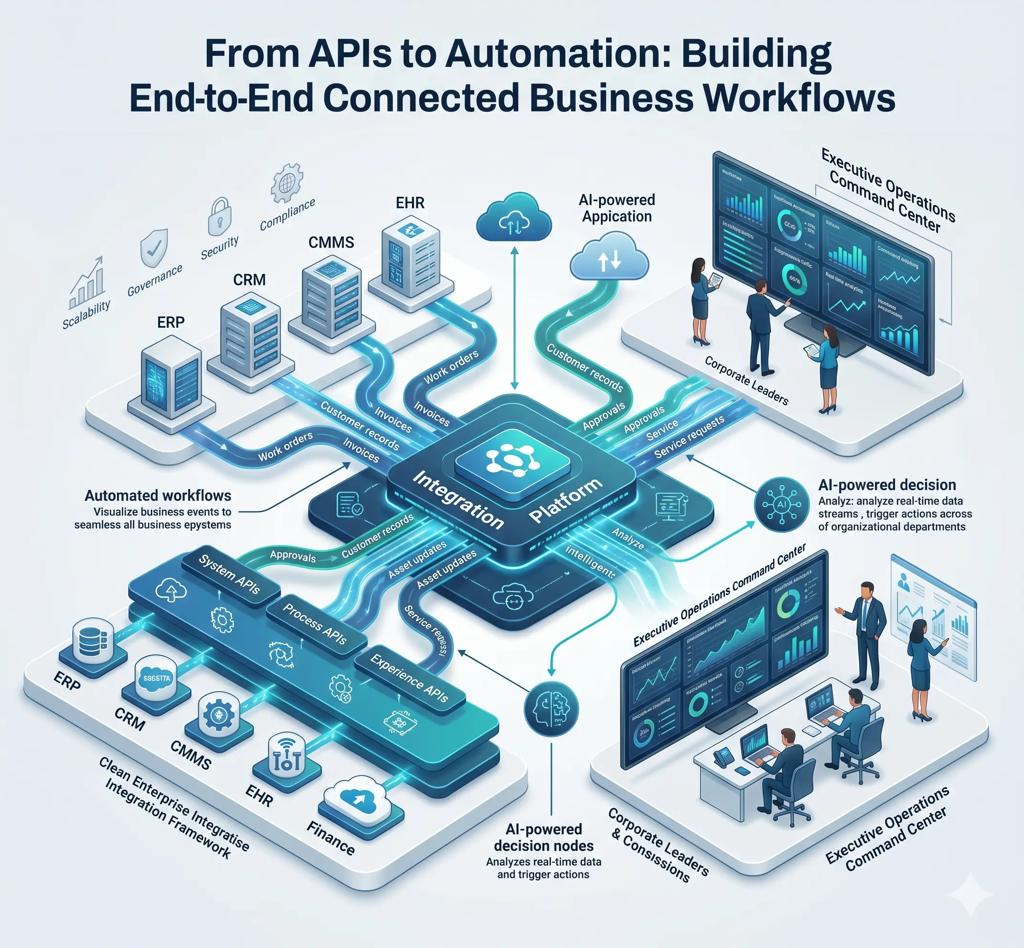
- Connecting processes with external systems through APIs
- Applying configured business rules and calculations
- Giving teams visibility into work, progress, and outstanding tasks
A common foundation for many kinds of applications
Many business applications share a set of underlying building blocks, even when they serve different industries.
Process orchestration defines the steps, handoffs, reviews, and transitions that move work forward.
Configurable screens and forms collect the information people need to complete each task.
Roles and task management help organize responsibilities and route work according to configured rules.
Data and API integrations allow applications to exchange information with existing business systems.
Business logic supports the validations, calculations, and rules that make an application specific to an organization's needs.
Bringing these capabilities together makes it possible to create solutions around real business requirements rather than forcing every team into the same fixed application.
Applications across industries
The same foundation can support many different business scenarios, including:
- Financial services: loan processing, credit reviews, document handling, and approvals
- Insurance: claims workflows, underwriting support, and customer onboarding
- Human resources: employee onboarding, recruitment, and internal administration
- Procurement: purchase requests, budget reviews, and vendor coordination
- Healthcare administration: operational requests, document processing, and departmental workflows
- Project delivery: project intake, task coordination, resource planning, and portfolio visibility
- Compliance: policy reviews, audit activities, and risk-related approvals
- Or a fully customized flow to run your business operations
For some organizations, the starting point may be a single departmental workflow. For others, it may be a larger initiative to digitize complex processes or modernize an existing application. The scope, integrations, governance, and validation will depend on the business requirements.
New opportunities for businesses and technology professionals
AI-powered application creation can change how organizations approach software projects. Businesses may be able to reduce repetitive configuration and move more quickly from a process idea to an application they can evaluate and refine.
It also creates opportunities for technology professionals, consultants, and system integrators. Their expertise remains essential but more of their effort can go toward understanding business problems, designing solutions, integrating systems, and handling complex requirements instead of repeatedly building common application structures from scratch.
Entrepreneurs and independent developers may also be able to turn specialized industry knowledge into reusable software solutions. Over time, reusable applications, processes, and integrations could support a broader ecosystem in which solutions are shared and potentially commercialized. This is an opportunity for the platform to develop, not a claim that a marketplace is already available.
A different way to think about enterprise software
Cloud computing changed how businesses access infrastructure. APIs made it easier for systems to communicate. Low-code platforms made some forms of application development more accessible. AI creates an opportunity to bring these advances together.
At DigitifyNow, we call our approach ZeroCode: start with the business requirement, use AI to help build the application at lightning speed, and customize and configurable it to organize processes, tasks, screens, data, and integrations.
The ambition is broader than building workflows. It is to make it easier for organizations to create, connect, and continually improve the business applications they depend on.